
Lighting
Companion articles to our YouTube Series Pull My Focus.

How do you create a realistic fire lighting effect video shot for your project? We'll show you the tricks professional gaffers use to create lighting effects with fluctuating lights and color, what components you need to adjust and how. You'll also learn how to make the right adjustments to change that same firelight into a TV or computer monitor light and other effects.
We also look at affordable LED lighting units like the Pretigo Omicoo Fire Light and Spiffy Gear's KYU-6 wearable effect lights.

What are some tricks when video lighting with lamps beside the usual stuff like getting an exposure, key and fill? What if we saw a reflection of the lamp, the light source, in the shot? Could we use that to affect the contrast in our shot?
Yes, we can, they're called Hot Kicks and we'll show you how.
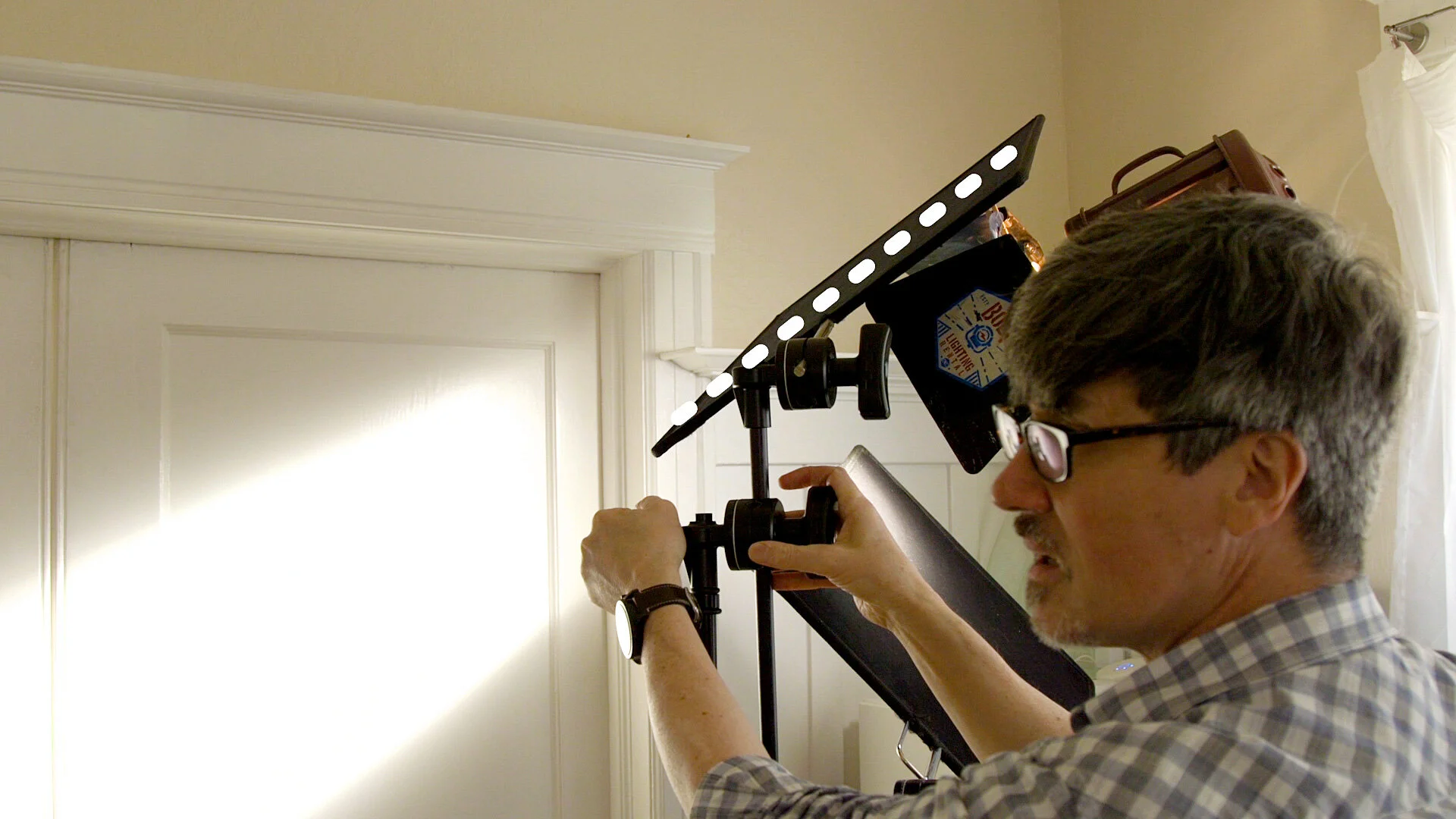
There are two parts to basic video lighting: lights and shadows. Lighting and light units usually get all the attention but what about the grip’s art of cutting and netting light? Let's look out how we can use flags and nets to adjust the contrast in our shots on the sets and our actors. We also make a window pattern and make our own cucoloris.

Have you wondered how to use a C stand, that odd-looking piece of equipment you see on every film, video and photography set? We'll show you how to use them, what they’re for, and why we think every household should have at least one C stand.

Bright sunny day. Great time to shoot inside a car. Or is it? The roof of the car lost all that light. Your actors are dark but the windows are so bright. Let's look at how to light a car scene so you can handle all that contrast for daytime, sunny car interior shots.

Framing techniques in film and video usually focus on composition and the 1/3 rule. But what about guiding the viewer's focus in the frame? What about all that other stuff vying for their attention?
What are different ways in your frame to guide the viewer's focus, their attention, to what you want? And how do you avoid objects stealing focus? We look at ways using composition, detail and lighting/contrast.

You need to shoot an interview. Maybe it’s for a documentary, a client video, a youtube video. How do you do it? Maybe you’ll shoot them in their house? Their office? Outside? Do you need lights? And what about the audio? What if you don’t know much about lighting or audio? What do you do?
We’ll show you the two most important tips on how to shoot without lights and how to get great audio.

Can you use a ceiling light for video? Usually, they're terrible point source lights that just look wrong for a video shoot. But what if we converted it into a bigger, softer source and dimmable? We'll show you how we converted Manu's ceiling light using the design of box lights from the film biz.

There's one key trick to a video lighting setup that if you can understand it, will make it easy for you to light different film styles. Contrast defines a film noir shot from a high key Hollywood scene, glamour and others. In this tutorial, we'll explain contrast and the contrast ratio, how to determine what it is, and how to light using it.
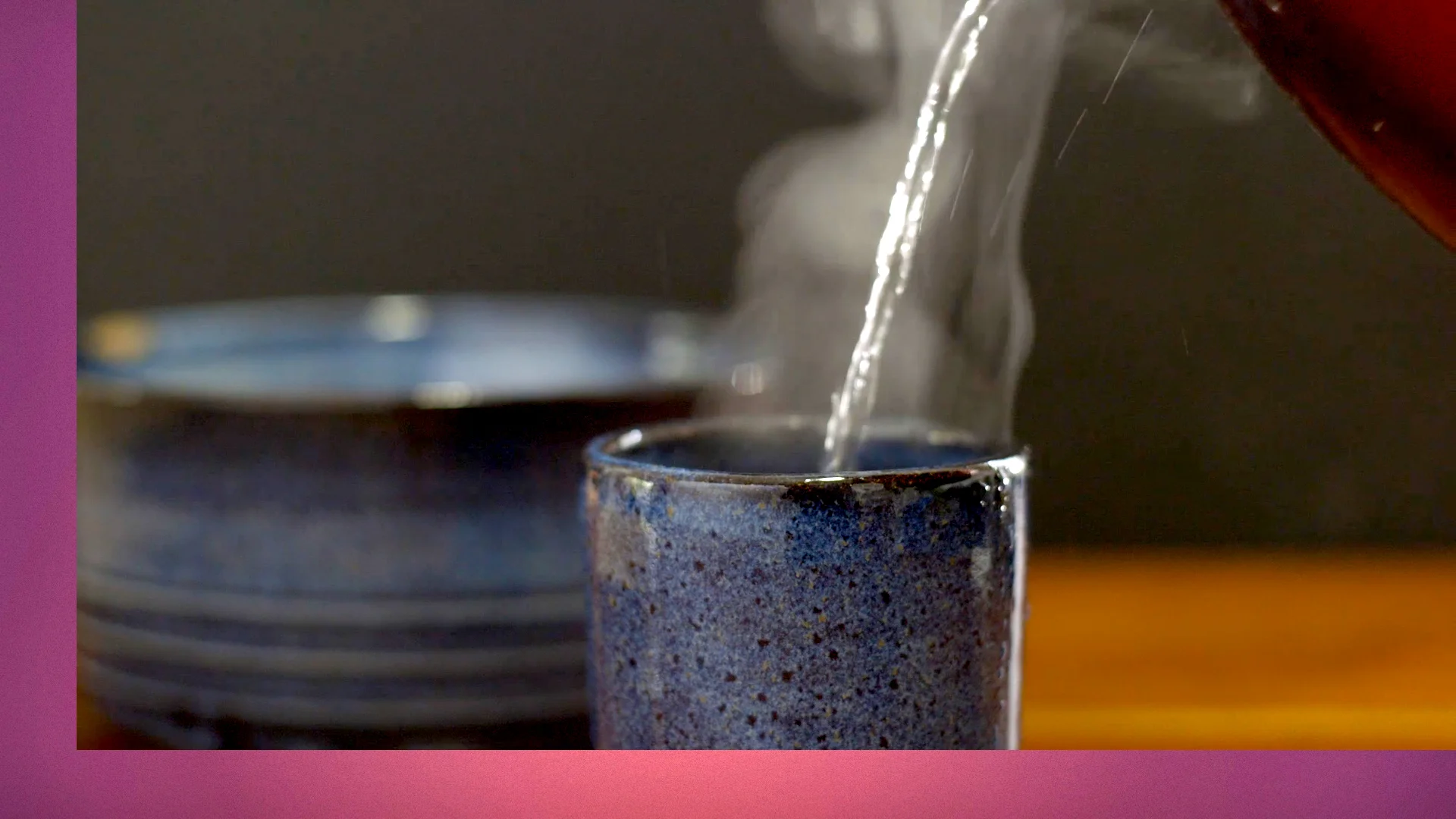
We’re going to show you some lighting tips and tricks you can use on any shoot, like making steam actually show up, using lensers and black wrap. If you shoot food videos, you’re going to love this.
Over time, you learn certain tricks of the trade that stay with you and become habits but they’re not always taught I’ve found because, well, they’re habits. You just do them, you don’t think about them. I’ve collected a few here for you.

We are going to talk about eye lights, two reasons to use them and two different ways to create them, and what the hell do they have to do with Capt. Kirk and Morticia Adams.

Daylight streaming in a window is a great light source but it means only shooting during the waning daytime hours. What if you could shoot a daylight interior, at night, with basic lights you can buy on Amazon and from your local hardware store?

We’re going to look at some tips and tricks for shooting great tabletop shots, whether it’s a product shot or an insert shot. We cover issues to watch for when you get in up close, how to sculpt an object with light and cards and how to build your own tabletop lighting softbox.

Guerrilla filmmaking means working with what you have to the best of your ability and in the area of lighting, nothing is better than using that great illuminator in the sky the sun. It shines without charge and is tax-free. Let’s talk about ways to leverage it for your interior lighting and how to augment it affordably.
Frank shows you how to light with window daylight, adding a bounce card, daylight balanced fill light and adding an edge light. He also covers how to ensure you buy the right lamps and bulbs to work with natural daylight.

Today we're going to show you three simple video tests you can record to help you discover your visual style. In each test, we’re going to change just one parameter to see how it affects the look and feel of our shot. You can apply this same principle to other forms of video and audio tests.

If you’re used to shooting inside, taking your video camera outside can be a study in contrasts, especially here in sunny California where the midday sun is high and harsh. Frank demonstrates some tricks to work with that big lumen maker in the sky: covering diffusion, exposing for a soft background with neutral density filters (ND's) and using a bounce reflector for back-lit subjects.

Lumens and Lux have started showing up in the specs for video as well as commercial lights, but what are they and how can you use them? Frank explains the difference between Lux, Lumens and Foot Candles, how to convert them, and which specs are helpful and which aren’t when you're purchasing or renting lights for your video production.

Filming insert shots can be fun and interesting, but a little tricky if your actor has to hold something steady in the frame. Frank demonstrates a grip trick using a pigeon plate and a grip stand to help film nice, steady insert shots and talks a little bit about French oak wine barrels.

Frank looks at the world of affordable fluorescents, how to attach them to light and grip stands, and explains CRI ratings so you can avoid green lighting.

Frank rediscovers a tried and true piece of common hardware in his kit and uses it to fill in those black holes in his shot. At some point, when lighting for your video production, you just run out of lights. What to do? You have a lot of CFLs and LED bulbs but no more lamps to put them in.

We’re going talk about two basic types of practical dimmers, a standard dimmer that’s used with tungsten lights, and electronic dimmers that work with everything including LEDs and dim-able CFLs.

Frank reviews the Neewer Umbrella Softbox and demonstrates how he uses it with a dual LimoStudio socket light. He also explains why he’s so excited about a product that only costs $7.50.

How to Make Transparent Liquids Pop
Lighting liquids for table top or an insert shot can be a little difficult, because, well they’re generally transparent. You need to reflect light off of something in order to see and record it right? So how do you do that when it’s mostly transparent. Here's a few tips and tricks.

If you tend to shoot inside, you probably rely on natural daylight as much as possible. Whether shooting in a corporate office or your living room, window daylight may be your key, backlight and/or ambient fill. But you still need some additional lighting to augment it, to add what’s missing.
If you can master using gels to change the background color in your videos then you can add color anywhere. We break down color effect gels, their two main uses in video, and show you how to pick from the 100's of color gels to use.